
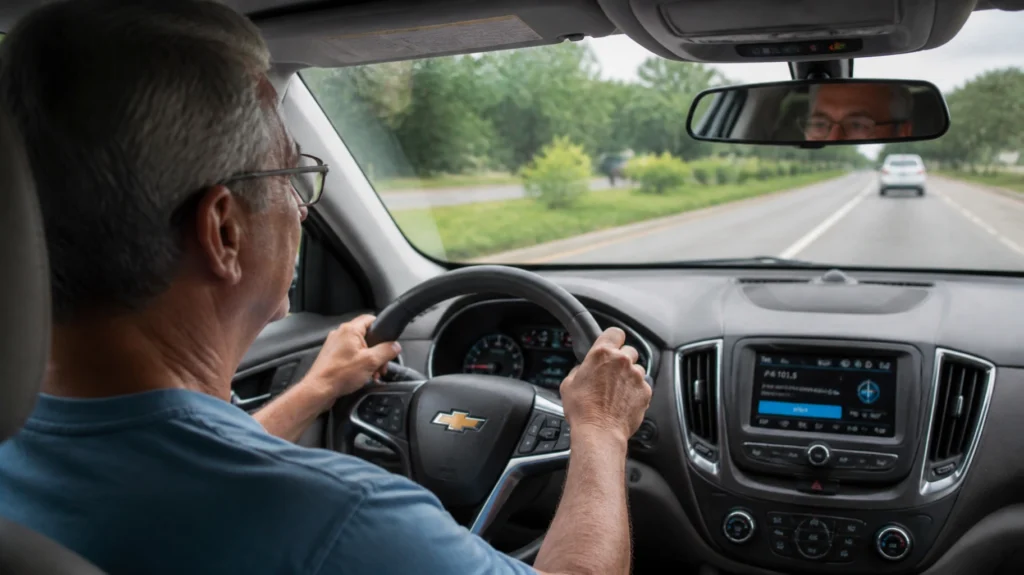
After a heart attack, a heart procedure or heart surgery, one of the first practical questions many people ask is when they can drive again. In Australia, national medical guidelines suggest minimum non-driving periods after common heart events and procedures, and your treating doctor or cardiologist advises you on your own situation. This article explains what those guidelines say, who makes each decision, what NSW drivers need to report, and when an occupational therapy driving assessment is sometimes part of the process.
Table of Contents
ToggleTLDR
- National guidelines (Austroads Assessing Fitness to Drive 2022) suggest minimum non-driving periods after heart events and procedures.
- For private drivers, these range from 2 days after a percutaneous coronary intervention (such as angioplasty or a stent) to 6 months after a cardiac arrest.
- Commercial vehicle drivers usually have longer non-driving periods and stricter standards.
- The periods are minimums, not a green light to drive once the time has passed. Your treating doctor or cardiologist advises when you can drive again, and if they advise you not to drive, you must follow that advice (NSW Government, accessed October 2026).
- In NSW, you must tell Transport for NSW about a medical condition or recent surgery that affects your driving, and Transport for NSW makes the final licence decision.
- Most people do not need an occupational therapy driving assessment after a heart event; it is only sometimes requested.
- Cardiac rehabilitation can help you plan a return to everyday activities, including driving.
How heart events can affect driving
Driving relies on being alert, comfortable and able to respond quickly. In the weeks after a heart attack or heart procedure, there is a period when symptoms, recovery from surgery or changes to treatment can affect these abilities. National guidance therefore suggests a break from driving after many heart events, followed by a check of longer-term fitness to drive once the condition has settled.
Symptoms that matter for driving include chest pain, palpitations, breathlessness and episodes of dizziness or fainting. After open chest surgery, healing of the breastbone can also limit how comfortably you turn, steer and wear a seatbelt for a while. Your treating team considers these factors when advising you.
What the national guidelines suggest
Doctors across Australia use Austroads Assessing Fitness to Drive (sixth edition, 2022, accessed October 2026) when advising on driving. Section 2.2.1, Table 5, lists suggested minimum non-driving periods after cardiovascular events and procedures. The figures below are taken from that table and the related medical standards (section 2.3).
Event or procedure | Private vehicle drivers (minimum, advisory) | Commercial vehicle drivers (minimum, advisory) |
Heart attack (acute myocardial infarction) | 2 weeks | 4 weeks |
Percutaneous coronary intervention (PCI), for example angioplasty, often with a stent | 2 days | 4 weeks |
Coronary artery bypass grafts | 4 weeks | 3 months |
Valve repair or replacement, including MitraClip, tricuspid clip and transcatheter (transcutaneous) aortic valve procedures | 4 weeks | 3 months |
Cardiac pacemaker insertion | 2 weeks | 4 weeks |
Cardiac arrest | 6 months | 6 months |
Implantable cardioverter defibrillator (ICD) insertion | 6 months where the ICD is fitted after a cardiac arrest. Where it is fitted to prevent a first event (primary prevention), the standards allow a conditional licence to be considered from at least 2 weeks after implantation. | 6 months where the ICD is for primary prevention; where it is for secondary prevention, the standard does not support a commercial licence |
Syncope (fainting) due to cardiovascular causes | 4 weeks | 3 months |
Heart or heart and lung transplant | 6 weeks | 3 months |
Austroads describes these as minimum advisory periods, based on expert opinion. They are not a green light to drive once the time has passed. Your doctor may advise a longer break depending on your recovery, symptoms and any complications.
Some heart conditions have no fixed waiting period in the table. For heart failure, for example, the private vehicle cardiovascular medical standards (section 2.3) look at whether symptoms arise on moderate exertion and how well the condition responds to treatment, and the commercial vehicle standards also consider exercise testing and heart function. For several events, including a heart attack, bypass surgery and pacemaker insertion, the standards also set longer-term licensing criteria, and a conditional licence with periodic review may be considered based on the treating doctor’s information.
Who decides when you drive again
Several people are involved in a return to driving after a heart event, and each has a different role. Knowing who does what can make the next steps clearer.
Your doctor or cardiologist advises
Your treating doctor or cardiologist knows your heart condition, your procedure and how your recovery is going. They advise you on when you can drive and whether you meet the medical standards. If they advise you not to drive, you must follow that advice. It can help to ask about driving at your follow-up appointment, including whether any symptoms or medication changes affect the advice.
Your duty to tell Transport for NSW
In NSW, you must notify Transport for NSW of any medical condition or recent surgery that affects your driving (NSW Government, accessed October 2026). Your doctor can explain whether your heart condition needs to be reported. Transport for NSW makes the final decision about your licence, which may include a conditional licence with regular medical reviews.
Commercial drivers have stricter standards
The commercial vehicle standards apply to drivers of heavy vehicles, public passenger vehicles such as buses, taxis and rideshare vehicles, and drivers who need a dangerous goods driver licence. These standards usually involve longer non-driving periods and, for some conditions, review by a specialist and exercise testing. If you drive for work, talk with your cardiologist early about what applies to you.
Getting ready to drive again
Once your doctor has advised that you can return to driving, a gradual approach often feels more comfortable. Before your first drive, it can help to check that:
- Your doctor or cardiologist has advised that you can drive, and you have reported to Transport for NSW where required
- You have no chest pain, palpitations, breathlessness, dizziness or fainting when you are active
- After chest surgery, you can turn, steer, check over your shoulder and wear a seatbelt comfortably
- You feel alert, and you have asked your doctor or pharmacist whether any new medicines may affect driving
- You start with short, familiar trips at quieter times
- You check with your insurer if you are unsure how your recovery affects your cover
If symptoms return while you are driving, pull over when it is safe to do so and seek medical advice. If symptoms are severe or do not settle, call Triple Zero (000).
Cardiac rehabilitation and recovery support
Cardiac rehabilitation is a program of exercise, education and support led by health professionals. The Heart Foundation recommends it after a heart attack, a stent, heart surgery, a device implant, cardiac arrest and other heart conditions, and notes it can help with a return to usual activities such as work and driving (Heart Foundation, cardiac rehabilitation, accessed October 2026). Your hospital team or GP can help you find a program near you.
The Heart Foundation also has plain-language information on driving and travelling after a heart attack. Rehabilitation is a good place to ask practical questions about driving, fatigue and getting back to daily routines.
When an OT driving assessment may help
Most people return to driving after a heart event on their doctor’s advice, without an occupational therapy driving assessment. An assessment is only sometimes part of the process, usually when a doctor or Transport for NSW wants more information about how a person’s health is affecting their actual driving.
Austroads notes, for example, that people with very severe heart failure may have ongoing effects on thinking or other neurological function that warrant a practical driving assessment (section 2.2.11). An assessment may also be considered when:
- A doctor or Transport for NSW has asked for one
- A heart event has been followed by changes in memory, attention or thinking
- Several health conditions together raise questions about driving
- Physical changes after surgery or a long hospital stay make driving tasks harder
A typical occupational therapy driving assessment includes an off-road assessment of skills such as vision screening, movement, thinking and road law knowledge, and usually an on-road drive in a dual-control vehicle with a qualified driving instructor. Your written report is usually ready within 2 to 5 business days. It is always shared with Transport for NSW, which is made aware of the driving assessment as part of the licence check process, and usually with your doctor.
The occupational therapist does not decide whether you can drive. Your doctor advises on the medical standards, and Transport for NSW makes licence decisions. GPs, cardiologists and case managers can find details about referring for a driving assessment if one is needed.
Looking for guidance on driving again?
Returning to driving after a heart event is a step to plan with your treating team, guided by the national standards and your own recovery. Drive & Thrive OT is a mobile occupational therapy service in Greater Western Sydney. Assessments are completed by our occupational therapist, a qualified OT driver assessor, at home or in the community where possible, subject to location and availability. If your doctor or Transport for NSW has suggested a driving assessment, asking about an assessment is a simple way to find out what is involved.
This article is intended for general information purposes only and does not constitute medical advice. Please consult your doctor, cardiologist or a qualified health professional for advice tailored to your individual needs. Your doctor advises on medical fitness to drive, and Transport for NSW makes decisions about your licence.