
Supporting Your Journey Back to Driving Independence
OT Driving Assessments for Seniors
Senior Driver Assessments
Your GP mentioned a medical review. Transport for NSW sent a letter. Or maybe someone in the family raised a concern you weren’t expecting. Drive & Thrive OT provides occupational therapy driving assessments specifically for older drivers across Greater Western Sydney.

An Honest, Respectful Assessment That Puts You First
Many older drivers come to us feeling uncertain. A letter from Transport for NSW, a GP referral, or a family conversation can raise real questions about what the assessment will involve and what it might mean for your licence.
At Drive & Thrive OT, we approach every senior driver assessment with care and without judgment. Our occupational therapists understand that driving represents more than transport. It is independence, routine, and connection to the people and places that matter to you. We are here to give you a fair, thorough assessment and a clear picture of where you stand.
What Our Senior Driver Assessments Include
Off-road clinical review
A structured assessment of the physical, cognitive and visual factors that affect safe driving, including reaction time, attention, vision and movement.
On-road practical drive
A practical drive through familiar local roads in a dual-controlled vehicle with your OT and a qualified driving instructor. You are guided clearly throughout.
Clear, honest outcome
A written report with your assessment outcome, any conditions or recommendations, and a plain-language explanation of what comes next.
Practical next steps
Where modifications, further review or alternative transport options may help, we explain your choices clearly rather than leaving you with just a result.

What Is an Older Driver Assessment?
An older driver assessment is an occupational therapy evaluation that examines how age-related changes may be affecting your ability to drive safely. It is not a test designed to take away your licence. It is a structured, evidence-based process that gives you, your GP, and Transport for NSW a clear and accurate picture of your current driving ability.
The assessment has two parts: an off-road clinical review completed at home or in a community setting, and an on-road practical drive conducted in a dual-controlled vehicle on familiar local roads. Together, they examine vision, reaction time, attention, physical movement and real-world performance across a range of everyday driving situations.
Many older drivers who complete an assessment continue driving. Some do so with simple recommendations, such as avoiding certain road types or times of day. The assessment is designed to support safe driving for as long as possible, not to end it.
When Older Drivers May Need a Driving Assessment
Most senior drivers are referred for an OT driving assessment after a specific trigger or as part of a routine medical review. You may need an assessment if:
- Your GP has referred you for a fitness to drive assessment following a health change or annual review
- Transport for NSW has sent a notification requesting a medical or practical driving assessment
- You have had a recent health event such as a stroke, fall, cardiac episode or surgery
- You have been diagnosed with a condition that may affect driving, such as dementia, Parkinson’s disease, macular degeneration or neuropathy
- A family member or trusted person has raised concerns about your driving
- You have noticed changes to your vision, reaction time or physical movement behind the wheel
- You want an independent assessment to reassure yourself, your GP or your family
Not all referrals lead to licence restrictions. Many older drivers complete the assessment and continue driving, sometimes with practical recommendations. If you are unsure whether an assessment applies to you, give us a call and we will help you work it out.
What Your Senior Driver Assessment Includes
Every older driver assessment has two key parts, which may be completed in one appointment or split across two visits depending on your needs and preferences.
1. Off-Road Clinical Assessment
A structured review of the factors that influence safe driving. This typically includes:
- Vision, including acuity, field of vision, contrast sensitivity and glare
- Attention, concentration and information processing speed
- Memory, planning and decision-making under real driving conditions
- Physical strength, coordination and range of motion, particularly in the neck, shoulders and limbs
- Reaction time and response to unexpected situations
- The potential effects of medications or health conditions on driving capacity
2. On-Road Practical Drive
A drive through familiar local Western Sydney roads in a dual-controlled vehicle, with your occupational therapist and a qualified driving instructor present. The route is planned to reflect the types of roads and intersections you use in everyday life. You are given clear guidance throughout.
3. Written Report and Recommendations
A clear, evidence-based report sent to you, your GP and Transport for NSW where required. The report explains the outcome, any licence conditions, and practical recommendations for what comes next, written in plain language.
Health Factors That May Affect Older Drivers
Age-related changes to health can affect driving in different ways and at different rates. Our occupational therapists are experienced in assessing drivers who are managing:
- Vision changes, including cataracts, glaucoma, macular degeneration and reduced contrast sensitivity
- Neurological conditions such as dementia, Parkinson’s disease, stroke and transient ischaemic attack (TIA)
- Musculoskeletal conditions including arthritis, reduced neck rotation and joint stiffness affecting mirror checks
- Cardiac conditions and the recovery period following a cardiac event or pacemaker implantation
- Metabolic conditions such as diabetes, particularly where hypoglycaemia is a risk factor
- The effects of medications on alertness, reaction time and coordination
- Balance and vestibular conditions that may affect vehicle control
We do not diagnose conditions. We assess how these factors interact with the practical demands of driving, and we provide a functional picture that helps your GP and Transport for NSW make informed decisions.
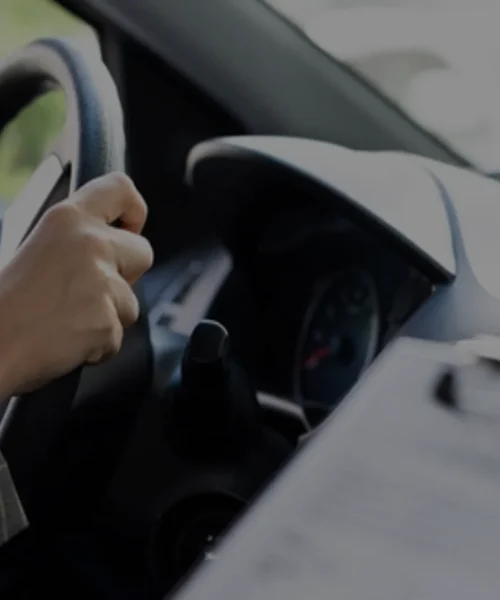
A Clear, Straightforward Process
We aim to make every stage feel manageable and supported, from your first call to your written report.
1. Enquire or Submit a Referral
Contact us directly or ask your GP or specialist to send a referral. We confirm the right assessment type, explain the fees and timing, and answer any questions before anything is booked.
2. Off-Road Clinical Session
We meet with you to review your medical history and complete the clinical part of the assessment. This is a conversation as much as an evaluation, paced to suit you with breaks built in as needed.
3. On-Road Driving Assessment
You drive a planned local route with our occupational therapist and a qualified driving instructor in a dual-controlled vehicle. The route is chosen to reflect the roads you drive in everyday life.
4. Report and Recommendations
Within a clear timeframe, we provide your written report with the outcome, any recommendations or conditions, and the next steps available to you. We will also explain the report if you have any questions.
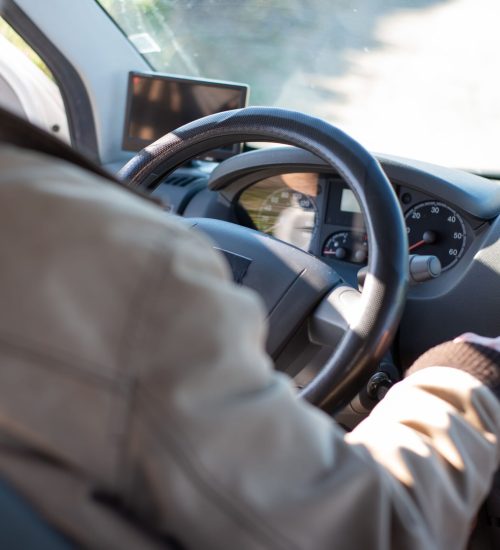
Who Drive & Thrive OT Supports
Our senior driver assessments support a wide range of people, including:
- Older adults who have received a referral from their GP or a notification from Transport for NSW
- Seniors who have noticed changes to their driving confidence, vision or physical ability
- People managing age-related conditions that may affect driving, including dementia, Parkinson’s and stroke
- Adults returning to driving after a medical event such as a cardiac episode or orthopaedic surgery
- Family members organising an assessment on behalf of a parent or loved one
- GPs and allied health professionals looking for a trusted OT referral for older patients
Servicing Greater Western Sydney
Drive & Thrive OT delivers senior driver assessments across:
- Parramatta, Westmead and Auburn
- Blacktown, Mount Druitt and Rouse Hill
- Penrith, St Marys and the Blue Mountains foothills
- Liverpool, Fairfield and Cabramatta
- Campbelltown, Camden and the Macarthur region
- The Hills District, including Castle Hill and Baulkham Hills
On-road assessments are completed on local roads, so the route reflects the conditions and intersections you encounter in your everyday driving.
Why Older Drivers Across Western Sydney Choose Drive & Thrive OT
- Driver-trained OTs with extensive experience in older driver assessments across NSW
- A respectful, unhurried approach that acknowledges the significance of the assessment for each person
- On-road routes planned around the local roads and conditions you actually drive
- Reports accepted by Transport for NSW, GPs and specialist teams
- Clear communication from the first call through to the final report
- Practical recommendations focused on supporting safe driving for as long as possible

Related Services
- OT Driving Assessments
- Functional Capacity Assessments
- Vehicle Modification Assessments
- Equipment Prescription Assessments
Frequently asked Questions
Will I automatically lose my licence if I am referred for an assessment?
No. Being referred for an OT driving assessment does not mean your licence will be cancelled. Many older drivers complete the assessment and continue driving, sometimes with simple recommendations such as avoiding particular road types or times of day. The assessment is designed to give you, your GP and Transport for NSW an accurate picture of your current driving ability, and a range of outcomes are possible.
What is the difference between a medical driving assessment and an OT driving assessment?
A medical driving assessment typically refers to a medical review completed by your GP or specialist to assess whether a health condition affects your fitness to drive. An OT driving assessment goes further by adding a structured off-road clinical evaluation and an on-road practical drive. Together, these provide a complete functional picture of your driving ability that your GP and Transport for NSW can act on confidently.
What happens if the assessment shows my driving is no longer safe?
If the assessment raises concerns about driving safety, the written report will explain the reasons clearly and outline any conditions or options available to you. This may include licence conditions, further review, vehicle modifications, or alternative transport planning. Your occupational therapist will walk you through the report and answer your questions. The aim is always to give you an honest outcome with a practical path forward.
Do I need a referral from my GP to book?
Not always. You can contact Drive & Thrive OT directly and our team will confirm whether a GP referral is required for your situation. If Transport for NSW has sent a notification requesting an assessment, please have that paperwork ready when you get in touch. We will confirm what is needed before anything is booked.
Can a family member attend the assessment with me?
Yes. A family member or support person is welcome to accompany you to the off-road clinical session. For the on-road component, the vehicle carries the driver, the occupational therapist and the driving instructor, so additional passengers are generally not possible. We are happy to debrief with a family member after the assessment is complete if that is helpful.
What should I bring to my older driver assessment?
Please bring your current driver’s licence, your glasses or contact lenses if you wear them for driving, a list of your current medications, and any recent medical reports or letters from your GP or specialist. If Transport for NSW has sent you a notification requesting the assessment, please bring that documentation as well. Your OT will let you know if anything else is needed when you book.
Is there anything I can do to prepare for the assessment?
A full older driver assessment typically takes two to three hours. This includes the off-road clinical session and the on-road practical drive, plus time to discuss initial findings. Depending on your needs and preferences, the two components can be completed in a single appointment or split across two visits. We pace the assessment to suit you and build in breaks as needed.
How long does the assessment take?
Arrive well rested and avoid alcohol or any medications that may cause drowsiness on the day, unless they are part of your regular regime and your GP has advised otherwise. Bring your glasses or contact lenses if you use them for driving. Drive your usual route in the days before the assessment if you feel comfortable doing so. There is no formal preparation required. The assessment is designed to reflect your everyday driving ability.
Will my GP and Transport for NSW receive the assessment report?
Yes, with your consent. The written report is shared with your GP and submitted to Transport for NSW where the assessment was requested by them. You also receive your own copy. The report explains the outcome, the reasons behind it, and any recommendations or conditions, so everyone involved has a clear and consistent understanding of the findings.
How do I book a senior driver assessment in Greater Western Sydney?
Call Drive & Thrive OT or complete the online enquiry form. Our team will ask a few questions about your situation, confirm the right assessment type, explain the fees and timing, and offer the next available appointment at a location that suits you. If you have a referral from your GP or a notification from Transport for NSW, have it ready when you call.
Book Your Senior Driver Assessment in Greater Western Sydney
Whether you have a referral in hand or are not sure where to start, our team will explain the process, answer your questions and confirm the right assessment type before anything is booked.
Call Drive & Thrive OT or submit an enquiry online. We will take it from there.