
Supporting your first steps towards driving
Potential to Drive Assessments
Wanting to learn to drive but unsure where to start, or whether you are ready, can make the learner years feel stressful for the family. A potential to drive assessment with an occupational therapist looks at the skills involved in driving and sets practical next steps toward your driving goals.
What Is a Potential to Drive Assessment?
A potential to drive assessment is an occupational therapy assessment, usually completed before you get your learner licence or sit the Driver Knowledge Test (DKT). It is available from 16 years of age, and can also be completed if you already hold a learner licence. It looks at the physical, cognitive and visual skills involved in driving, along with how you learn, plan and respond in everyday situations. The aim is to give you, and your family if you choose, clear information about readiness and the supports that may help before or during lessons.
The assessment is a starting point for planning, rather than a licence test. It does not decide whether you will get a licence. In NSW, learner and provisional licences are issued by Transport for NSW once you meet its requirements, including passing the required tests, and where a health condition may affect driving, your treating doctor’s advice is also considered.
If you already hold a licence and have been asked to complete a fitness to drive assessment, for example after a change in health, our OT driving assessments page explains that service.

What the Assessment Involves
The assessment has three parts: a clinical assessment, passenger activities in the car (with some behind-the-wheel driving for learner licence holders) and a life skills review.
Clinical Assessment
- An interview about your medical history, school or study, learning styles and supports
- A physical function screen, such as movement and coordination
- A cognitive function screen, such as speed of processing and visual-motor integration
- Road law knowledge, such as give way diagrams and observing traffic scenarios in photos
Passenger Activities
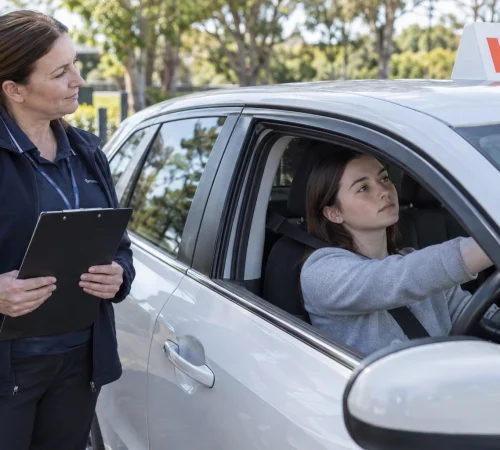
You sit in the front passenger seat with the OT driver assessor and a specialised driving instructor. This helps break down the underlying tasks involved in driving and gives the OT driver assessor a clearer picture of your abilities, without overloading you or adding too much pressure. Activities include lane position awareness, searching for items and hazards on the road, gap selection and problem solving.
If you hold a valid learner licence, the assessment can also include some behind-the-wheel driving. Without a learner licence, the in-car part is completed from the passenger seat only. The parent most involved in helping you learn to drive is usually present in the car.
Who This Assessment Can Help
A potential to drive assessment is available from 16 years of age and may suit you, or someone you support, if:
- You are approaching learner age and want to understand your readiness to start driving
- You hold a learner licence and are finding the road rules, coordination or the pace of driving harder than expected
- You are a neurodivergent young person or adult exploring whether, and when, to begin learning to drive
- You live with a disability or health condition that affects movement, vision, attention or memory, and you are thinking about learning to drive
- You are a parent, carer or supervising driver who wants guidance on how to support practice
- You are a self-managed or plan-managed NDIS participant with a goal related to learning to drive
Support coordinators, plan managers, GPs and allied health professionals can find referral details on our information for referrers page.
Setting Driving-Readiness Goals Together
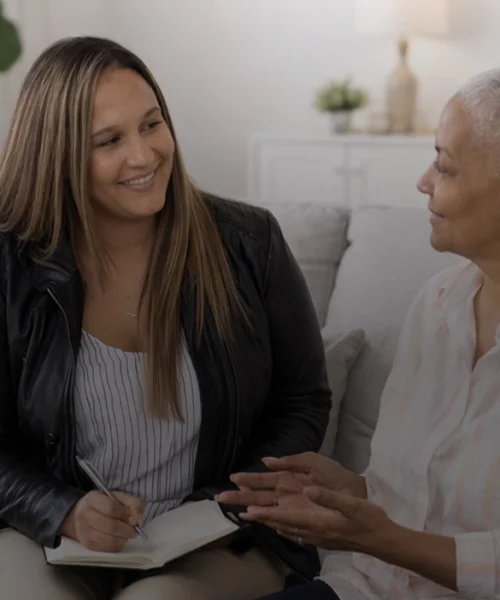
We start by talking with you about what driving would mean in your life, such as getting to work, study, sport or appointments, or simply having more independence. Together we set goals that are realistic for where you are now, and they can be revisited if your needs change. Family members and support people are welcome to be involved, if you would like them to be.
For some people, the right next step is to start lessons. For others, it is to spend more time building particular skills first, or to wait and review later. Whatever the recommendation, it is explained clearly so you can make an informed choice.
Getting Ready for the Driver Knowledge Test
In NSW, the first step toward a learner licence is passing the Driver Knowledge Test (DKT), a computer-based test of the road rules, along with an eyesight test. You need to be at least 16 to sit the DKT, and the main study resource is the Road User Handbook published by Transport for NSW.
Some people find studying the road rules harder than expected, particularly when reading, attention, memory or test nerves make learning feel overwhelming. Our Driver Readiness Program offers 1:1 sessions to help neurodivergent learners prepare for the NSW DKT. If you have already passed the DKT, sessions can continue, developing the underlying cognitive and functional skills involved in safe driving and helping you apply what you learnt for the DKT in your driving lessons. The program focuses on understanding road rules, executive functioning and practical decision-making. The DKT itself is booked and completed through Service NSW.
What the Driver Readiness Program Includes
- Neurodivergent-friendly Driver Knowledge Test preparation
- Easy-to-understand visual learning resources
- Concrete explanations of road rules
- Real-life road scenarios
- Interactive visual aids, audio learning resources and video demonstrations
- Practice quizzes and mock Driver Knowledge Tests
- Individual learning plans
- Education for parents and support workers
Therapy focuses on executive functioning, attention and concentration, planning and sequencing, hazard awareness, flexible thinking, working memory, visual scanning, road sign recognition, traffic situations, emotional regulation, confidence building and anxiety management.
Our resources are designed for visual learners, using simple language, structured learning and step-by-step explanations to support understanding and confidence.
Cognitive, Visual and Physical Strategies for Driving
Driving draws on many skills at once. Depending on what the assessment shows, your occupational therapist may suggest strategies in three areas. Everyone is different, so strategies are tailored to you, and whether and how much they help varies from person to person.
Cognitive Strategies
Attention, planning, memory, processing speed and hazard awareness all play a part in driving. Strategies may include breaking driving tasks into clear steps, using routines and checklists, and practising decision-making in quieter, lower-pressure settings before moving on to busier roads.
Visual Strategies
Driving relies on scanning the road, judging distance and noticing changes quickly. Strategies may include scanning routines and activities that practise visual attention. If anything in the assessment raises a question about your eyesight, we will recommend you see an optometrist or your doctor, as an occupational therapist does not diagnose or treat eye conditions.
Physical Strategies
Coordination, reaction time, strength, range of movement and posture affect how comfortably you can steer, brake and check over your shoulder. Strategies may include activities to practise these skills, advice on seating and positioning and, where a physical need may affect how you use the controls, a vehicle modification assessment.
Practical Lessons With a Driving Instructor
Practical driving lessons are given by a driving instructor. You can choose your own instructor, or we can suggest specialised driving instructors who may suit your needs. Your occupational therapist is not usually present during lessons, unless a reassessment or review is needed. Instead, we prepare a driving remediation program that is shared with you and, with your consent, your driving instructor and supervising drivers, so lessons are structured and everyone is working from the same plan.
Learner drivers under 25 in NSW also need to record supervised driving hours in a logbook before they can take the driving test. The recommendations may help family members and supervising drivers plan practice sessions that suit the learner.
Reviewing Progress as You Learn
Learning to drive is rarely a straight line. While you are having driving lessons, your occupational therapist follows up with you to look at what is going well, what still feels hard and whether the strategies or goals need adjusting. A written progress report is not usually provided, but can be prepared on request, for example if you need one to apply for more funded sessions. Updated recommendations are shared with you, and with your instructor or referrer only with your consent.
If a review suggests a health condition may affect your driving, we will recommend you talk with your doctor, as medical fitness to drive is considered by your doctor and Transport for NSW. Licence holders must also tell Transport for NSW about a long-term health condition that may affect their driving, and your doctor can advise you on this.
How the Process Works
1. Get in touch
You, a family member or your referrer contact us to talk about your goals, funding and consent.
2. Background
With your permission, we gather information about your health, learning and any driving experience so far.
3. The assessment
Your occupational therapist completes a clinical assessment, passenger activities in the car with a specialised driving instructor, and a life skills review.
4. Recommendations
Usually within 2 to 5 business days, you receive a written report with the findings and practical recommendations, such as starting lessons, building particular skills first or other supports. The report is shared with others, such as your GP or referrer, only with your consent. Where Transport for NSW has asked for the assessment, the outcome is reported to Transport for NSW.
5. Ongoing support
If you choose the Driver Readiness Program, we plan 1:1 sessions for DKT preparation and the skills involved in safe driving, with follow-up while you are having lessons.
You can read more about each step on our process page.
Home and Community Appointments in Greater Western Sydney
Drive & Thrive OT is a mobile occupational therapy service based in Seven Hills NSW, working across Greater Western Sydney, including Parramatta, Blacktown, Penrith, Richmond and the Hills District. Appointments are usually completed in your home or community where possible, subject to location and availability. View our service areas to check whether we cover your suburb.
Fees and Funding
Private, aged care and insurance clients receive a quote before booking. For self-managed and plan-managed NDIS participants, an assessment usually requires 8 to 10 hours at the NDIS price limit for occupational therapy ($193.99 per hour), depending on whether a vehicle modification assessment is also needed. NDIS price limits are set by the NDIA and may change. We are not able to take NDIA-managed (agency-managed) referrals. For more detail, see our fees and funding page.
Frequently asked Questions
How Is a Potential to Drive Assessment Different From an OT Driving Assessment?
A potential to drive assessment is for people who have not yet started driving, or are early in learning, and looks at readiness and the supports that may help. An OT driving assessment is usually for people who already hold a licence and have been asked to complete a fitness to drive assessment, and it most often includes an on-road drive. If you are not sure which suits your situation, get in touch and we will help you work it out.
Will the Assessment Tell Me if I Can Get My Licence?
No. The assessment gives you information about readiness and practical recommendations; it does not decide whether you will get a licence. Licences are issued by Transport for NSW once you meet its requirements, including passing the required tests, and if a health condition may affect driving, your doctor’s advice is also considered.
Do You Help With the Driver Knowledge Test?
Yes. Our Driver Readiness Program offers 1:1 sessions to help neurodivergent learners prepare for the DKT, with visual learning resources, concrete explanations of road rules, practice quizzes and mock tests, and an individual learning plan. The DKT itself is booked and completed through Service NSW.
Is This Assessment Suitable if I Learn Differently?
It can be. We work with neurodivergent learners and their families, as well as people with a disability or health condition, and take time to understand how each person learns. The pace, communication style and strategies are adjusted to suit you, and we will talk with you first about whether an assessment is the right next step.
Do I Need a Learner Licence Before the Assessment?
Not necessarily. A potential to drive assessment can be completed before you have a learner licence, with the in-car activities done from the passenger seat. If you hold a valid learner licence and want to see how you drive, the assessment can also include some behind-the-wheel driving.
Can I Use My NDIS Plan for This Assessment?
If you are a self-managed or plan-managed NDIS participant, you may be able to use your plan, depending on your plan and goals. We are not able to take NDIA-managed referrals. Your support coordinator or Local Area Coordinator can help with questions about how your plan can be used.
Do I Need a Referral?
You can contact us directly, or a support coordinator, GP or allied health professional can refer you through our information for referrers page. If your funding requires a referral, we will let you know what is needed.
Who Completes the Assessment?
Your assessment is completed by Drive & Thrive OT’s occupational therapist, a qualified OT driver assessor, working with a specialised driving instructor for the in-car activities.
Start Planning Your Driving Goals
If you or someone you support is thinking about learning to drive, we would be glad to talk through whether a potential to drive assessment is a good first step. Call 0424 851 858 or book online, and we will explain what is involved and the fees before anything is booked.
The information on this page is general in nature and does not replace individual advice. Please speak with your doctor or a qualified health professional about your own circumstances. Decisions about learner and provisional licences are made by Transport for NSW.