
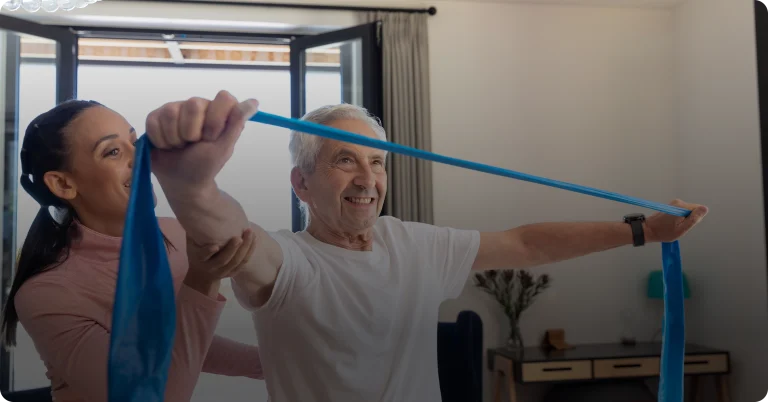
The right piece of equipment can make a real difference to safety, independence and daily life. The wrong one can sit unused in a cupboard. An occupational therapy (OT) equipment assessment is the practical, person-centred process that bridges the gap, matching the right assistive technology to the person, their home, and what they want to do. This guide walks you through what an OT equipment assessment is, why fit matters, what an OT looks at, how the NDIS structures assistive technology, the assessment process, and what to expect with Drive & Thrive OT.
TLDR
- An OT equipment assessment matches assistive technology to a person’s function, environment and goals.
- The NDIS defines assistive technology broadly: any device or system that helps someone do something more safely or easily (NDIS, 2026).
- NDIS assistive technology is grouped by cost and complexity into low-cost, mid-cost and high-cost.
- Every NDIS request must meet the reasonable and necessary criteria under the NDIS Act.
- The OT report justifies the recommendation against those criteria.
- Drive & Thrive OT delivers mobile assessments across Greater Western Sydney for NDIS, private, insurer-funded and aged care clients.
- Good equipment fit reduces the risk of falls, equipment abandonment and lost independence.
What an OT equipment assessment is
An OT equipment assessment is an occupational therapy assessment that identifies what assistive technology or daily living equipment will safely and effectively support a person’s function, and documents the recommendation. Assistive technology covers a wide range of items. The NDIS, using the World Health Organisation definition, describes it as any device or system that allows a person to do tasks they would otherwise be unable to do, or that increases the ease and safety with which tasks can be performed (NDIS, 2026; Astrad Allied Health, 2025). You can read more about Drive & Thrive OT’s equipment and home safety assessments on the service page.
Why fit matters more than features
A device can look great on paper and still be the wrong choice if it does not match the person’s function, the home it will be used in, or what the person actually wants to do. Equipment that does not fit can increase fall risk, lead to abandonment of the device, and quietly chip away at independence. A good assessment focuses on fit, which is three things working together at once: the person, the activity, and the environment. The OT’s job is to match these, not to recommend the most expensive or the most marketed product.
What an OT looks at during assessment
A thorough assessment considers function, environment and personal goals together. Each of these influences the others.
Function and daily activities
The OT looks at how the person manages self-care, mobility, transfers, toileting, showering, cooking, sleeping, working and accessing the community. Where does pain, weakness, fatigue or cognitive load get in the way? What is easy on a good day, and what becomes hard on a tougher one? When the picture is broader than equipment alone, the OT may also discuss functional capacity assessments, which look at function across a wider range of areas.
Home and community environment
The same person can need different equipment in different homes. The OT assesses the realities of the space: steps, doorway widths, bathroom layout, floor surfaces, lighting, kitchen heights, whether the home is rented or owned, and the routes the person takes through the community. Mobile OT assessments help here, because they happen in the actual home rather than a generic clinic, which makes the recommendations practical.
Goals and preferences
What does the person want to be able to do? Get to the letterbox, return to part-time work, shower without help, sleep through the night without back pain. The OT also asks about preferences and what would actually be used. Even the best device on paper sits in a cupboard if the person does not want to use it. Trialling and shortlisting from real options is much better than picking from a catalogue.
How NDIS assistive technology levels work
When the NDIS is the funder, the structure of assistive technology shapes how the assessment is run. The NDIS groups assistive technology into three cost categories, with different evidence required at each level (NDIS, 2026; Astrad Allied Health, 2025).
| Level | Cost range | Assessment required | Examples |
| Low-cost AT | Under $1,500 | No formal assessment for many items; may be funded from Core Consumables | Non-slip mats, walking sticks, adapted cutlery, basic shower chairs |
| Mid-cost AT | $1,500 to $15,000 | Written evidence from a qualified AT advisor or assessor | Transfer benches, basic wheelchairs, handrails, communication devices |
| High-cost AT | Over $15,000 | Formal assessment by an AT assessor and NDIA approval before purchase | Power wheelchairs, ceiling hoists, complex seating systems |
For low cost assistive technology, NDIS examples include non-slip mats and basic shower chairs. Level 2 assistive technology and ndis level 3 assistive technology requests need stronger evidence as the complexity and cost increase. The OT helps work out where a recommended item sits and what evidence is needed.
The reasonable and necessary criteria explained
Every NDIS assistive technology request must meet the reasonable and necessary criteria under Section 34 of the NDIS Act 2013 (Astrad Allied Health, 2025). In practical terms, the OT report needs to address that the item:
- Is related to the person’s disability.
- Helps them pursue their goals.
- Supports social and economic participation.
- Represents value for money.
- Has evidence of effectiveness.
- Has been considered alongside informal supports and mainstream services.
- Is not the responsibility of another system, such as the health system.
A good report does this clearly so the NDIA reviewer has the information needed to make a decision.
Step by step assessment process
A typical equipment assessment moves through a clear sequence. Detail varies by funder, but the structure is broadly the same (NDIS, 2026; Astrad Allied Health, 2025):
- History and goals interview, including current daily challenges and what success looks like.
- Functional assessment, looking at movement, transfers, hand function, vision, cognition and endurance as relevant.
- Environmental assessment in the home or community.
- Equipment trials where possible, comparing real options.
- Shortlist of best-fit options based on the data.
- Quotes from registered or accredited suppliers for higher-cost items.
- Report writing, addressing the reasonable and necessary criteria.
- Submission to the NDIS, insurer or other funder.
- Review and decision by the NDIA or funder.
- Delivery, setup and follow-up, including training so the person and their supporters can use the item safely.
Funding pathways beyond the NDIS
Drive & Thrive OT works with NDIS participants, private clients, insurer-funded clients and aged care referrals. The assessment principles are the same across funders. The report is tailored so the recommendation makes sense to the people who need to read it. If you are a GP, case manager or family member exploring an assessment, the OT referrals across Sydney page explains how to send a referral.
What to expect with Drive and Thrive OT
Drive & Thrive OT is a mobile service across Greater Western Sydney, led by Zenith Williams, an OT with over 12 years of experience. Assessments are completed in the home or community, so recommendations are grounded in the actual space the person lives in. The approach is person-centred and respectful, with clear communication from the first phone call to the final report. Reports are written to be accepted by NDIS, insurers, GPs and specialist teams, and the focus is always on practical recommendations rather than a one-size answer.
Book your equipment assessment today
If you, a family member or a client you support could benefit from the right equipment to make daily life safer and easier, an assessment is the practical next step. You can book your assessment at a time that suits you, or get in touch with any questions at any time.
This article is intended for general information purposes only and does not constitute medical advice. Please consult a qualified health professional for advice tailored to your individual needs.